
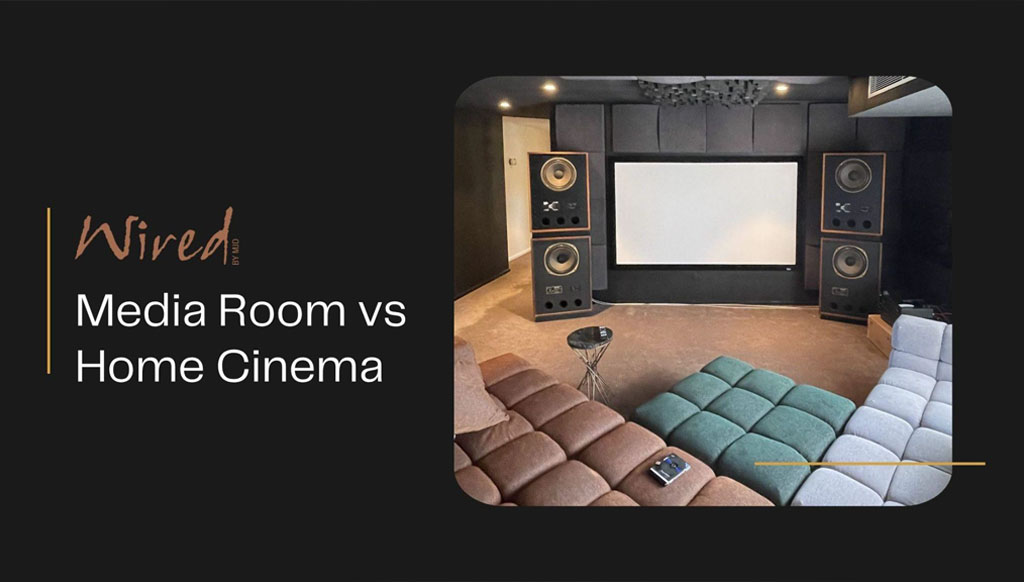
“Home cinema” is a term I hear used a lot, usually to describe a space where the family gathers around the biggest screen in the house, with a soundbar or some speakers, watching the latest releases.
But when someone comes to us asking for a home cinema, we’re thinking about something completely different.
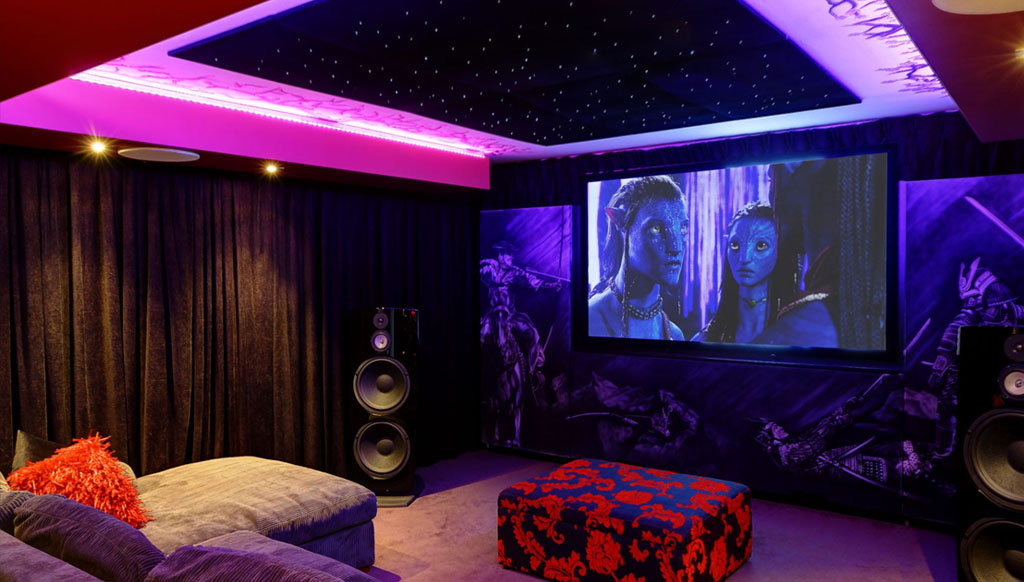
To us, a home cinema is a dedicated space. A room that’s sealed off and acoustically controlled, designed specifically to deliver the best possible audio and video experience. It’s not a lounge with a screen bolted onto one wall. It’s a room built to transport you somewhere else entirely, somewhere you forget you’re even at home, with sound that makes you jump and seating comfortable enough to feel like a first-class passenger.
Everything in that room is intentional. Distractions are minimised, the acoustics are optimised, and the whole space is built around reproducing the director’s cut the way it was meant to be experienced.
It can still serve other purposes outside of movie nights, a yoga room, a quiet reading space, a place for music practice, but at its core, it’s designed for cinema first.
Media Rooms Are a Different Approach
Media rooms work differently, and that’s not a downgrade, it’s a different brief entirely.
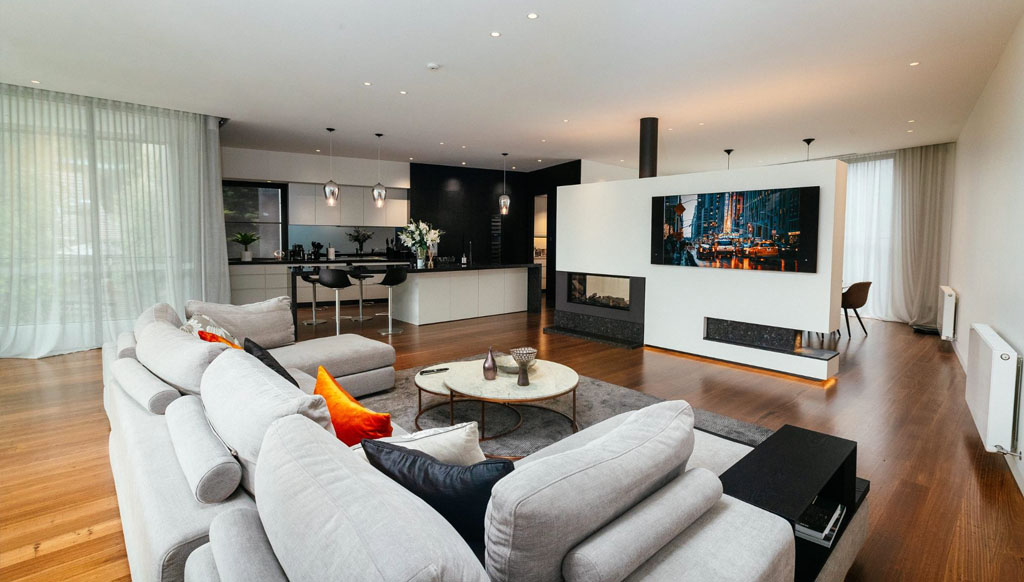
More often than not, they’re not dedicated, sealed spaces. They open into living areas, games rooms, kitchens or a bar behind them. Because of that, they’re harder to control acoustically and visually, and the design has to work with the architecture rather than against it.
This is where good engineering actually earns its keep. Our solutions engineering team works across all kinds of spaces where performance matters, but the room still has to look and feel right as a living space. Getting both right at once is the real job.
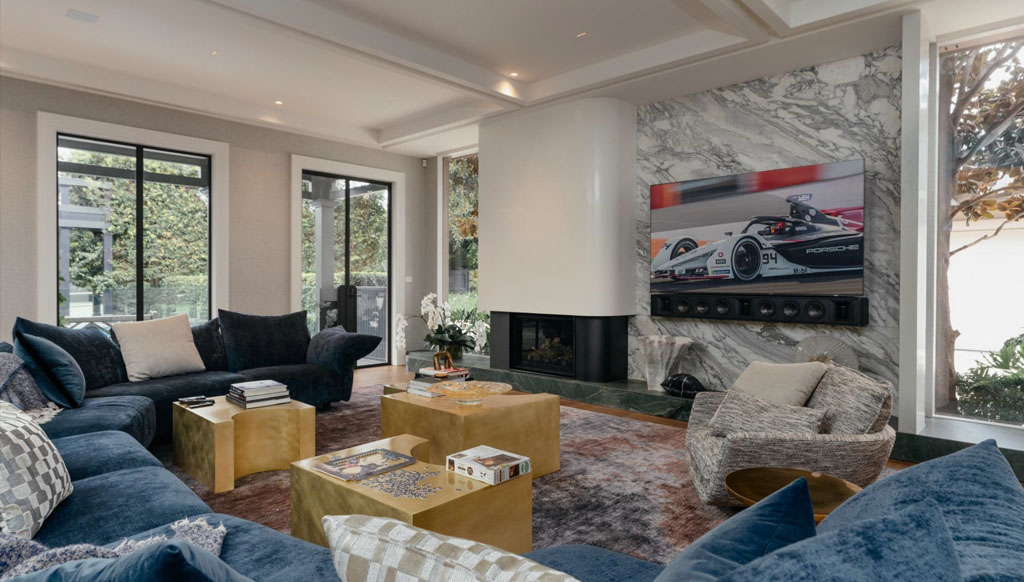
The systems vary accordingly. Not every media room needs full surround sound. Some run extended audio, some run simple two-channel stereo, some use a soundbar, and some use completely hidden audio and video solutions with no visible speakers at all. In open-plan rooms with natural light flooding in, a large-format display generally outperforms a projector, since it isn’t relying on a fully darkened room or a high gain screen to deliver brightness the way projection does.
None of that makes a media room any less enjoyable. If a dedicated cinema isn’t possible, a well-designed media room can still create a genuinely cinematic feel, just delivered in a more flexible, integrated way.
What This Looks Like in a Real Home
We’ve designed media spaces that, in photos, look exactly like a dedicated cinema. Then, at the press of a button, the room transforms back into a living space. Views of the city return through the balcony glass, the hallway and bar behind it are exposed again, and the display itself slides away behind a panel, with a piece of collectable artwork taking its place.
We always say, don’t go without a cinematic experience just because your floor plan won’t allow for a dedicated room.
A media room, done properly, can completely change how you experience film at home. That’s the focus at Wired by MJD: designing the right solution for the space, and for how you actually live in it.
What Good Engineering Looks Like in an Open Space
This is where most media room projects either succeed or fall short, and it usually comes down to what’s been planned before the build starts, not what’s bolted on afterwards.
Acoustic treatment in an open-plan room can’t look like acoustic treatment. It has to sit inside joinery, behind ceiling bulkheads, or within wall panelling that’s already part of the architecture, rather than as visible foam or fabric panels the way it might in a sealed cinema. Done well, a guest wouldn’t know it’s there at all.
Calibration also has to account for a room that doesn’t behave like a cinema. Hard surfaces, open hallways and high ceilings all change how sound travels, so the system has to be tuned to the actual space, not to a theoretical sealed box. Lighting needs the same level of planning, since a media room generally still functions as a living space during the day, which means the lighting design has to support both film nights and everyday use without compromising either one.
This is the same principle that applies across every room we design, whether it’s a media room or a fully sealed reference cinema. The outcome depends on how the room is planned and engineered, not on how much equipment goes into it.
Frequently Asked Questions
What is the difference between a media room and a home cinema?
A home cinema is a dedicated, acoustically controlled room designed specifically for film viewing. A media room is typically a multi-use, open-plan space that integrates cinema technology into a broader living environment without sealing it off.
Can a media room sound as good as a home cinema?
A media room won’t match a fully engineered dedicated cinema for acoustic precision, simply because the room itself isn’t sealed and treated the same way. That said, a well-designed media room, with the right speaker placement, acoustic treatment and calibration, can still deliver a genuinely impressive result. We treat every media room project with the same engineering care as a dedicated cinema build.
Does a media room need full surround sound?
Not necessarily. The right approach depends on the space and how it’s used. Some media rooms suit full Dolby Atmos surround systems, others are better served by extended audio or simple two-channel stereo, and some use a soundbar or completely hidden in-wall and in-ceiling solutions with no visible speakers at all.
What if my floor plan doesn’t allow for a dedicated cinema?
A well-designed media room is a genuine alternative, not a compromise. Done properly, it can still deliver a real cinematic feel. We’ve built media spaces that look just like a dedicated cinema in photos but open up completely into the living area at the press of a button.
Should a media room use a projector or a display?
Most media rooms suit a large-format display better than a projector, mainly because they’re rarely fully light-controlled. A display holds its brightness and image quality in a room with ambient light, where a projector depends heavily on darkness to perform at its best.
Not sure which option suits your home? Talk to the Wired by MJD team about your space and we’ll help you find the right approach.